Effective ESL Worksheets for Adults: Guide & Templates 2025
Best ESL Worksheets for Adults: Improve English Fast in 2025
Adult learners bring motivation, urgency, and real-world goals to the ESL classroom. A common question is: "Can worksheets be used for adults?" The answer is a definitive yes—when used correctly. The primary purpose of a worksheet for adults is not busywork, but to consolidate knowledge, provide structured scaffolds for speaking, and serve as a tangible record of progress.
This guide highlights the worksheet features adults value most, curates the formats that deliver fast results (including free printable ESL worksheets for adults), and shares practice strategies like the 70/30 rule to keep learning purposeful.
Understand the Adult Learner Mindset
Adults engage deeply when lessons connect directly to their goals. Aligning with Vygotsky's theory of adult learning (specifically the Zone of Proximal Development), worksheets should bridge the gap between what a learner can do alone and what they can achieve with guidance.
To keep adult learners engaged, successful materials often leverage the 4 A's of adult learning (Anchor, Add, Apply, Away) and foster the 4 C's of ESL: Communication, Collaboration, Critical Thinking, and Creativity.
"Adults are motivated to learn when they have a need to know." — Malcolm Knowles
Worksheet Features Adults Value
Select worksheets that mirror real communication so learners can transfer new language instantly.
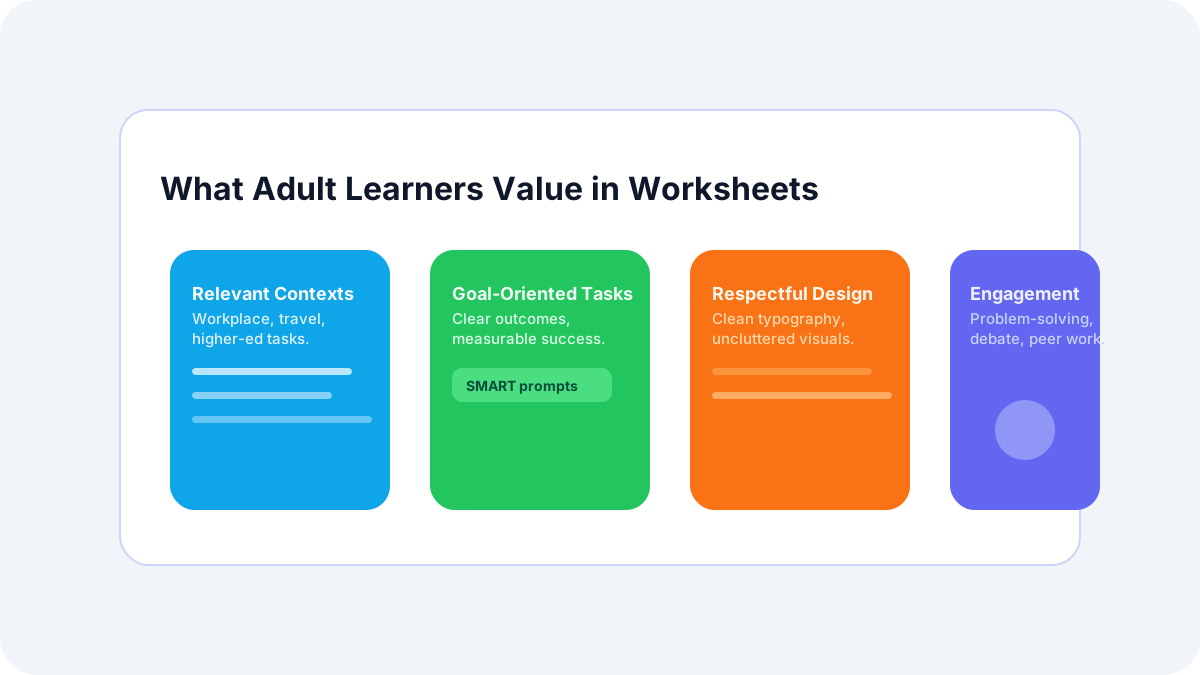
- Practical and relevant: Focus on workplace communication, travel scenarios, academic skills, and social language.
- Goal-oriented: Include clear learning objectives and measurable outcomes so progress is visible.
- Respectful tone: Use mature visuals and topics that reflect adult life, diversity, and professionalism.
- Engaging tasks: Encourage critical thinking, debate, and problem solving rather than rote repetition.
Recommended Worksheet Types for Adults
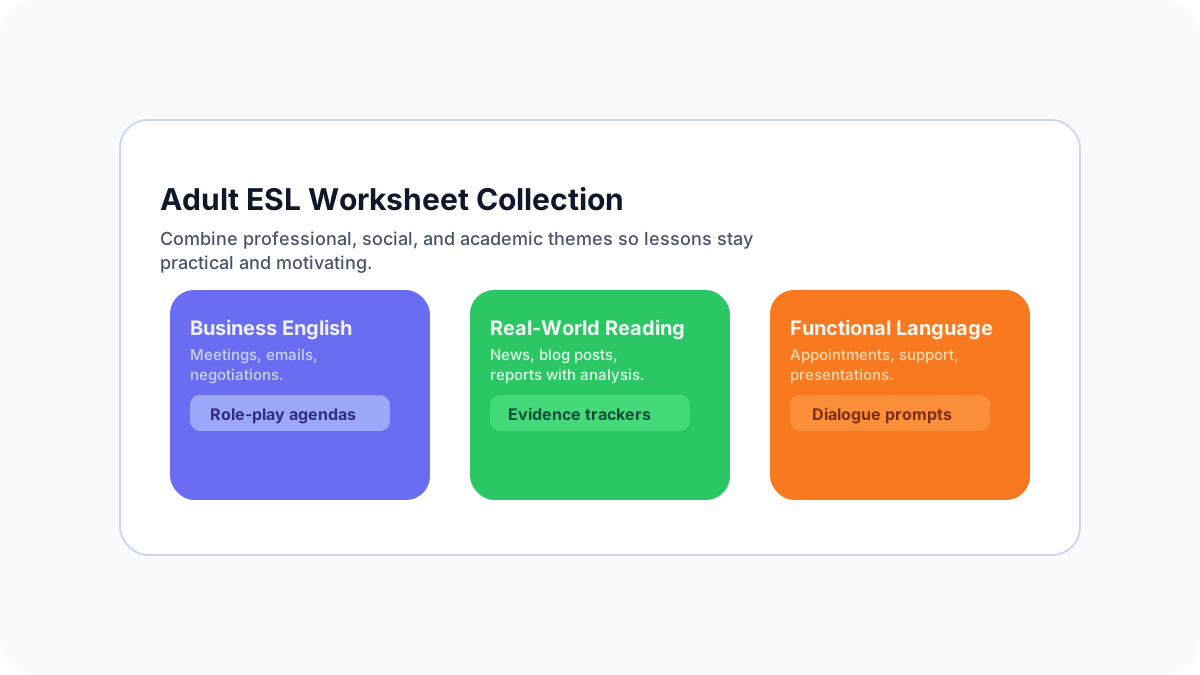
- Business English case studies: Simulate meetings and negotiations in niche industries like Tech (agile stand-ups), Healthcare (patient intake), or Hospitality (guest conciergerie) to build workplace fluency.
- Conversational scenarios: Dialogs and role-plays that practice small talk, networking, and community interactions.
- Authentic reading sets: News articles, blog posts, and reports paired with analysis and discussion prompts.
- Functional language guides: Step-by-step worksheets for making appointments, handling customer service, or pitching ideas.
- Advanced grammar refreshers: Short, focused drills with communicative follow-up for fine-tuning accuracy.
💡 AI Pro Tip: Generate Scenarios Instantly
Struggling to write realistic dialogs? Ask ChatGPT or Claude: "Write a script for a B2-level negotiation between a [Industry] supplier and a client regarding a delayed shipment, including 3 idiom examples." This saves hours of prep time.
The Perfect Adult ESL Worksheet Template
Use this simple structure to create high-impact worksheets in minutes:
// HEADER
Goal: [Specific Communicative Outcome]
Level: [CEFR Level] | Time: [Duration]
// PART 1: WARM-UP (5 min)
1-2 discussion questions to activate schema (e.g., "When was the last time you...")
// PART 2: INPUT (10 min)
Short text, dialog script, or vocabulary list with context.
Tip: Keep it authentic (email, news snippet).
// PART 3: CONTROLLED PRACTICE (10 min)
Fill-in-the-blanks or matching to check understanding of key terms.
// PART 4: PRODUCTION (15+ min)
Role-play scenario or problem-solving task using the new language.
Practice Strategies That Work
- Apply the 80/20 Rule: In a communicative classroom, teacher talking time should be minimal (20%). Use worksheets to drive student-led production (80%).
- Follow the 70/30 Rule: Dedicate 70% of time to active practice and only 30% to instruction/input.
- Use the 10-Minute Rule: Adult attention spans vary. Chunk worksheet activities into 10-minute segments to maintain focus.
- Try the 3-2-1 Rule in Speaking: Use a worksheet topic for a 3-minute speech, then repeat it in 2 minutes, and finally in 1 minute to boost fluency and processing speed.
- Set clear targets: Tie each worksheet to a SMART goal so learners track what success looks like.
- Lower speaking anxiety: Use worksheets as a "safety net." Allow students to write key phrases or bullet points on the sheet before speaking, reducing the cognitive load during role-plays.
- Blend media: Supplement worksheets with podcasts, videos, or industry documents for richer context.
Video: Teaching English to Adults
Measure Progress and Celebrate Wins
Show adult learners their investment is paying off.
- Micro-assessments: Use quick checks or exit tickets to capture gains after each worksheet.
- Learning journals: Ask learners to reflect on how they used new language at work or in daily life.
- Feedback loops: Provide individualized comments highlighting strengths and showing next steps.
Where to Find Printable ESL Worksheets?
If you aren't creating your own, knowing where to find printable ESL worksheets (PDF) is agile teaching 101. Key sources include:
- ESLflow & All Things ESL: Great for free ESL worksheets for adults PDF, especially for beginners and pre-intermediate levels.
- British Council & Linguahouse: High-quality, often paid, materials for Business English and general proficiency.
- Worksheet Generators: You can also use our TEFL net worksheet generator allow you to create custom gap-fills from any text instantly.
Frequently Asked Questions (FAQ)
What's the difference between a workbook and a worksheet? ▼
A workbook is a comprehensive collection of practice materials covering a whole curriculum, whereas a worksheet is a single sheet (often a loose leaf or PDF) focused on a specific skill, topic, or lesson segment.
Can worksheets be used for assessment? ▼
Yes. Worksheets are excellent for formative assessment (checking understanding during learning) and can be used as quizzes for summative assessment (evaluating learning at the end).
How do people with ADHD do homework? ▼
Adult learners with ADHD often struggle with long, unstructured tasks. Worksheets help by breaking assignments into visual, manageable chunks. To assist further, allow for "movement breaks" and use timer-based strategies (like the Pomodoro technique) alongside the worksheets.
Related Resources
- Ultimate Guide to ESL Lesson Plans for Adults
- Activities to Improve Speaking Fluency
- Using Authentic Materials in ESL Teaching
About the Author
Thomas Gueguen is a CELTA-certified English coach and the founder of The English Workshop. With over 12 years of teaching experience, he is an expert in TOEIC, IELTS, and TOEFL preparation, guiding students to a 98% success rate. Thomas is also the author of popular English learning guides, including "TOEIC - Le coach". He leverages his former corporate marketing background at companies like Bouygues and Veolia to help professionals use English to advance their careers.
Connect on LinkedInGet the Latest ESL Resources Delivered to Your Inbox
Join 10,000+ ESL teachers who receive our weekly newsletter featuring:
- Curated teaching materials and lesson plans
- Latest ESL tools and resources
- Teaching tips and best practices
- Exclusive content and early access to new resources
Related Articles
Continue learning with these related ESL teaching resources
Part of these learning paths:
Related Resources
Explore these hand-picked resources that complement this article
New to ESL Teaching?
Check out our comprehensive glossary of ESL teaching terms and concepts.
Browse ESL Glossary