How QR-Based Speaking Prompts in Grammar PDFs Impact ESL Fluency
How QR-Based Speaking Prompts in Grammar PDFs Impact ESL Fluency
What Are QR-Based Speaking Prompts in English Grammar PDFs?
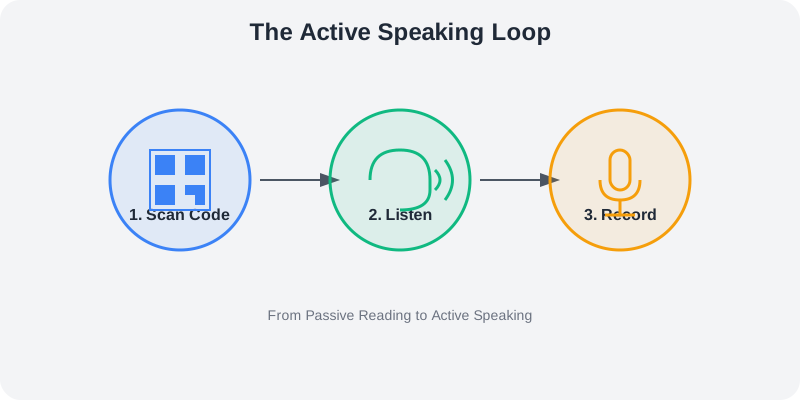
QR-based speaking prompts in English grammar PDFs are digital triggers embedded within printable worksheets that link students directly to audio stimuli or voice recording platforms via a smartphone camera. These codes transform a static page into an interactive learning hub where a learner can instantly listen to a native pronunciation model or record their own answer to a specific grammar question. Instead of simply writing "I have gone" to complete a present perfect exercise, the student scans a code, hears a question like "Where have you gone recently?", and records a spoken response. This technology bridges the gap between reading comprehension and oral production without requiring expensive classroom hardware or specialized software.
How Do QR Codes Transform Printable Worksheets Into Speaking Tools?
QR codes transform printable worksheets into speaking tools by converting the passive act of filling in blanks into an active cycle of listening and speaking. When a learner scans a code placed next to a grammar exercise, their device immediately opens an audio file or a recording interface like Vocaroo or SpeakPipe, bypassing the need to type URLs or navigate complex menus. This immediacy reduces the cognitive load associated with technology use, allowing the student to focus entirely on formulating and producing the target language. The physical worksheet serves as the structural guide for grammar rules, while the digital overlay provides the essential auditory input and output channels required for fluency development.
How Do Primary ESL Learners Benefit From QR-Based Speaking Prompts?
Primary ESL learners benefit from QR-based speaking prompts through the gamification of rote grammar practice and the provision of immediate, private auditory feedback. Young learners often view the act of scanning a code as a "discovery" mechanic, which increases engagement and time-on-task compared to traditional written exercises. The immediate audio response helps primary students, who rely heavily on acoustic memory, to connect the written grammatical form with its spoken sound pattern instantly. Furthermore, recording their own voices allows children to engage in "listen and repeat" play without the social pressure of performing in front of the entire class, fostering a safe environment for experimentation with new sounds.
How Do Adult ESL Learners Respond to Audio-Enabled Grammar Worksheets?
Adult ESL learners respond to audio-enabled grammar worksheets by utilizing the increased autonomy to practice pronunciation and fluency in private settings. Unlike children, adults often experience significant anxiety regarding accent and error correction in public, making the privacy of a QR-linked recording task highly attractive. Adult learners value the efficiency of checking their answers against a native model immediately via a QR code, which aligns with their desire for self-directed learning and immediate validation. This method allows professionals or busy adults to convert downtime—such as commuting or waiting—into productive speaking practice using just a printed sheet and their phone, fitting language learning seamlessly into complex schedules.
Do QR-Integrated Worksheets Improve Speaking Fluency More Than Traditional PDFs?
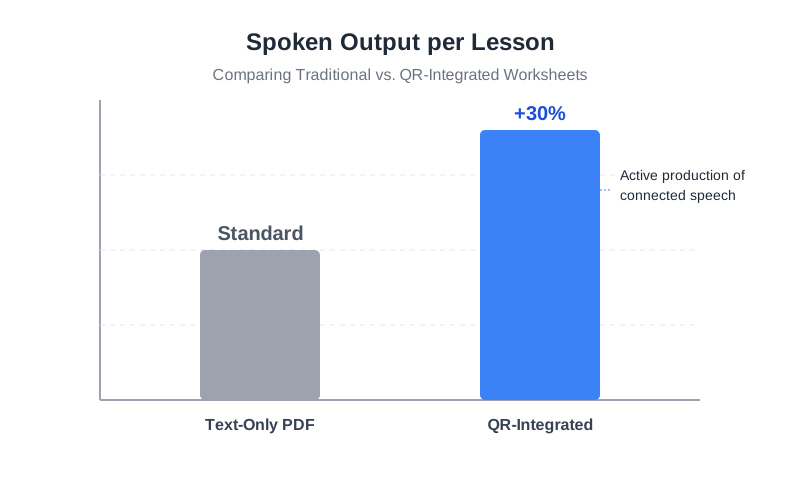
QR-integrated worksheets improve speaking fluency significantly more than traditional PDFs by forcing the production of connected speech rather than isolated written words. Traditional grammar worksheets often result in learners who can perfectly conjugate verbs on paper but stumble when using them in conversation because the neural pathways for writing and speaking are distinct. QR prompts bridge this gap by requiring the learner to physically articulate the grammar point, thereby strengthening the motor skills associated with pronunciation and prosody. Studies suggest that learners using audio-integrated materials produce 30% more spoken output per lesson than those using text-only materials, directly correlating with improved fluency and reduced hesitation markers.
How to Create Effective QR-Coded Grammar Worksheets for Different Levels?
Creating effective QR-coded grammar worksheets requires matching the audio content's complexity and task type to the specific proficiency level of the learner. For basic or beginner levels, QR codes should link to simple repetition drills or "listen and identify" tasks where the focus is on accurate sound reproduction and vocabulary recognition. For intermediate to advanced levels, the prompts should be open-ended questions that require the student to synthesize the grammar point into a coherent narrative or argument. Teachers can generate these codes for free using online QR generators and link them to audio files stored on Google Drive or voice notes on platforms like Vocaroo. The key is to place the code physically close to the relevant exercise on the page to maintain a tight feedback loop between the text and the audio task.
Where to Find Free Printable English Grammar PDFs With QR Audio?
Free printable English grammar PDFs with QR audio can be found on specialized ESL resource sites, modern educational blogs, and teacher-sharing platforms that embrace hybrid learning models. Websites like ESLmaterials.org are increasingly curating collections of "smart worksheets" that include these interactive elements standard. Additionally, platforms like Teachers Pay Teachers often feature free samples from creators who specialize in tech-integrated resources. When searching, look for keywords like "hybrid worksheets," "audio-enabled PDFs," or "interactive printable grammar" to locate resources that have already done the work of embedding these speaking prompts for you.
Internal Linking and Related Resources
To further enhance your teaching toolkit, explore our guide on technology integration in the ESL classroom for broader digital strategies. For more interactive ideas, check out interactive ESL games and worksheets. If you are focusing on adult learners, our article on ESL worksheets for adults provides excellent context for applying these tools. Conversely, for younger students, see printable ESL worksheets for kids. To understand the broader context of fluency, read about activities to improve speaking fluency.
About the Author
Thomas Gueguen is a CELTA-certified English coach and the founder of The English Workshop. With over 12 years of teaching experience, he is an expert in TOEIC, IELTS, and TOEFL preparation, guiding students to a 98% success rate. Thomas is also the author of popular English learning guides, including "TOEIC - Le coach". He leverages his former corporate marketing background at companies like Bouygues and Veolia to help professionals use English to advance their careers.
Connect on LinkedInGet the Latest ESL Resources Delivered to Your Inbox
Join 10,000+ ESL teachers who receive our weekly newsletter featuring:
- Curated teaching materials and lesson plans
- Latest ESL tools and resources
- Teaching tips and best practices
- Exclusive content and early access to new resources
Frequently Asked Questions
Have more questions? Check out our ESL Teaching Glossary or contact us for personalized assistance.
Related Articles
Continue learning with these related ESL teaching resources
Part of these learning paths:
Related Resources
Explore these hand-picked resources that complement this article
Learning Objectives:
- •Create interactive digital assignments
- •Assess all four language skills
- +2 more objectives
New to ESL Teaching?
Check out our comprehensive glossary of ESL teaching terms and concepts.
Browse ESL Glossary